
Why Thomas Partey’s emergency Canada appeal failed: Seven key findings from the Federal Court ruling

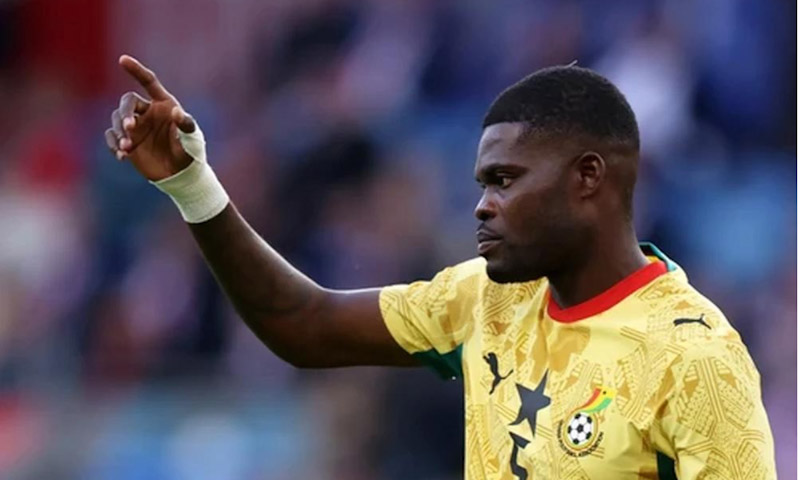
Thomas Partey’s hopes of featuring in Ghana’s opening match of the 2026 Fifa World Cup came to an end on Tuesday after the Federal Court of Canada dismissed his emergency application seeking urgent relief from a visa refusal.
The ruling by Justice Roger R. Lafrenière not only confirmed that the Black Stars midfielder would miss the Panama clash in Toronto, but also provided a detailed explanation of why the court was unwilling to intervene.
A review of the 12-page judgment reveals that Partey’s application faced legal, procedural and evidentiary hurdles that ultimately proved insurmountable.
1. The court said it could not simply order Canada to let him in
One of the central problems identified by the judge was the nature of the relief being sought.
While Partey’s lawyers framed the application as a request for urgent intervention, the court concluded that the practical effect would have been to facilitate his entry into Canada in time for Ghana’s World Cup opener.
Justice Lafrenière noted that counsel ultimately conceded during the hearing that a direct order compelling Canadian authorities to issue a visa was not within the court’s jurisdiction.
In essence, the court found itself being asked to achieve indirectly what it could not legally order directly.
2. The challenge arrived too late
Timing also worked against the Ghana midfielder.
The judge repeatedly emphasized that Partey was seeking extraordinary relief only days before the match against Panama.
Granting the application would have required the court to bypass several normal procedures, including the preparation of a Certified Tribunal Record and the government’s opportunity to fully respond.
The court described such a process as impractical and said it would have been unable to make a properly informed decision within the limited time available.
3. His answer on the visa application became a major issue
Perhaps the most damaging detail in the ruling relates to the original visa application itself.
Court documents reveal that when completing the statutory criminality and security questions for his Temporary Resident Visa application, Partey answered “No” when asked whether he had ever committed, been arrested for, charged with or convicted of a criminal offence in any country.
That answer triggered further scrutiny after Immigration, Refugees and Citizenship Canada (IRCC) became aware of the criminal charges he is facing in the United Kingdom.
The discovery prompted Canadian authorities to issue a Procedural Fairness Letter and raise concerns about both admissibility and possible misrepresentation.
Although the court stopped short of making a finding that Partey deliberately misrepresented his circumstances, the issue significantly weakened arguments that the immigration process had been unfair.
4. The court found no serious issue with the visa refusal
To obtain emergency relief, Partey first had to establish that there was a serious issue to be tried.
The judge found he failed to do so.
Justice Lafrenière concluded that immigration officials had not ignored evidence, misunderstood the facts or acted outside their authority.
“The totality of the reasons provided, which includes the GCMS notes, demonstrates there is no serious issue in the underlying refusal,” the ruling stated.
That finding alone dealt a major blow to the application.
5. The absence of a conviction was not enough
A key plank of Partey’s argument was that he has not been convicted of any offence.
The midfielder has pleaded not guilty to multiple rape charges and one count of sexual assault in the United Kingdom.
The court, however, ruled that Canadian immigration law does not necessarily require a criminal conviction before inadmissibility concerns can arise.
Justice Lafrenière noted that the relevant section of the Immigration and Refugee Protection Act permits immigration authorities to act where there are reasonable grounds to believe an offence has been committed.
The judge went further, warning that accepting Partey’s interpretation would effectively create a loophole allowing individuals facing serious criminal charges to avoid inadmissibility assessments simply because their trials had not yet taken place.
6. Missing the World Cup was not considered irreparable harm
Partey’s lawyers argued that being unable to play at the World Cup would cause significant and irreparable harm to both the player and Ghana’s national team.
The court was unconvinced.
While acknowledging the importance of the tournament, Justice Lafrenière ruled that the circumstances did not meet the legal threshold required for an injunction.
The judgment also noted that any reputational damage suffered by the player flowed primarily from the criminal charges he is facing in the United Kingdom rather than from Canada’s immigration decision.
“While the Applicant’s circumstances are unusual and important to him personally and to his national team, they do not rise to the level of irreparable harm,” the judge wrote.
7. Canada’s immigration interests outweighed football considerations
The final hurdle for Partey was the balance of convenience test.
Here again, the court sided firmly with the Canadian government.
Justice Lafrenière ruled that preserving the integrity of Canada’s immigration system outweighed the applicant’s desire to participate in a football match, regardless of the significance of the World Cup.
The judgment stressed that public interest considerations and the enforcement of immigration laws weighed heavily against granting emergency relief.
What happens next?
The ruling dismisses only the emergency motion and not the underlying judicial review itself.
Court documents show that Partey has also submitted a request for reconsideration of the refusal decision and an alternative request for a Temporary Resident Permit.
However, with Ghana’s opening match against Panama scheduled for June 17, the practical consequence of Tuesday’s decision is clear: one of the Black Stars’ most experienced midfielders will not be available for the team’s World Cup opener.
For Ghana, the court’s verdict closes the door on a dramatic legal battle that unfolded alongside preparations for the country’s return to football’s biggest stage.
