

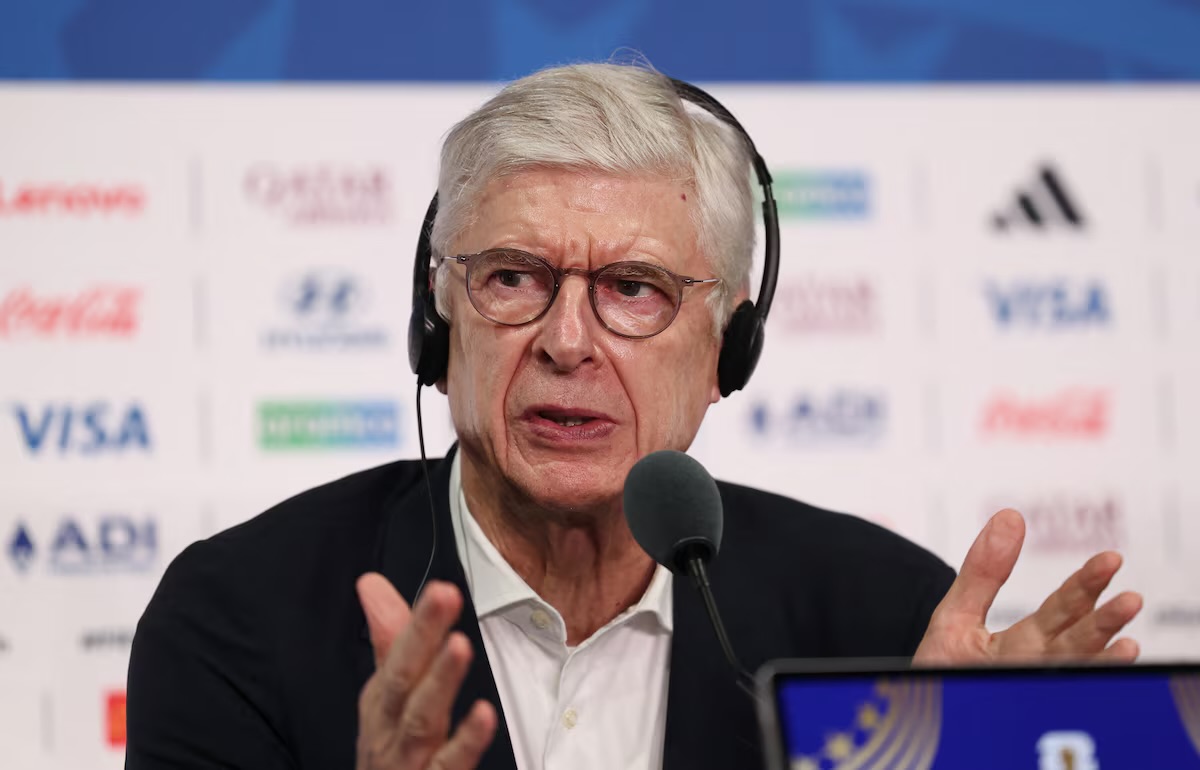
FIFA’s Chief of Global Football Development, Arsene Wenger, says the mandatory hydration breaks introduced at the 2026 FIFA World Cup did not affect the flow of matches or influence results, although football’s governing body has yet to decide whether they will remain part of future tournaments.
The three-minute breaks, taken midway through each half, were introduced for every match at the tournament to help players cope with varying weather conditions across the United States, Canada and Mexico.
FIFA said the measure was designed to protect player welfare amid concerns over extreme heat in several host cities.
However, the initiative divided opinion throughout the competition.
Spain coach Luis de la Fuente and Netherlands captain Virgil van Dijk accepted that the breaks were necessary during matches played in high temperatures but questioned why they were enforced in cooler conditions and in stadiums with closed roofs.
Meanwhile, Uruguay coach Marcelo Bielsa was among the strongest critics, arguing the stoppages disrupted the rhythm of games and altered football’s traditional flow. Fans also voiced their frustration by booing the breaks during some matches.
Despite the criticism, Wenger insists FIFA’s analysis found no evidence that the breaks changed the outcome of matches.
“Our analysis is that the hydration breaks had no impact on the flow of the game and no impact on the results,” Wenger said.
He added that FIFA would conduct a full post-tournament review before making a decision on whether hydration breaks should become a permanent feature of future competitions.
The review is expected to consider player welfare, weather conditions and feedback from teams, officials and supporters before any final decision is made.
The 2026 Fifa World Cup ends today as Spain and Argentina battle in the final at 7.00pm Ghana time.
