

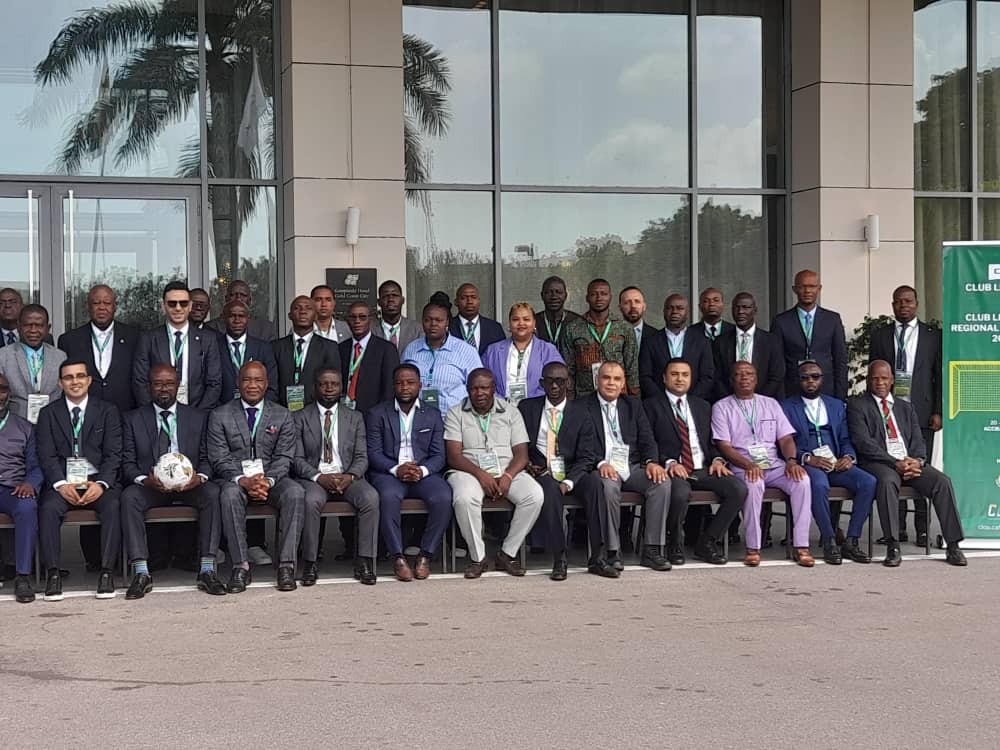
The Confederation of African Football (CAF) has launched a pivotal club licensing workshop in Accra, bringing together a host of dignitaries, stakeholders, and football executives to discuss and strategize on the development of African football.
The three-day event, which commenced on Monday, May 20, 2024, is scheduled to run until Wednesday, May 24, 2024.
The workshop’s opening ceremony featured notable speeches from key figures in African football. Muhammad Sidat, Head of Professional Football at the Confederation of African Football, and Kurt Okraku, President of the Ghana Football Association (GFA), delivered inspiring addresses to kick off the proceedings.
Sidat highlighted the importance of club licensing in raising standards across African football clubs, emphasizing its role in ensuring sustainable development and enhancing the professional environment. “The implementation of robust club licensing regulations is critical to elevating the quality and competitiveness of African football on the global stage,” Sidat remarked. He stressed that adherence to these standards would help bridge the gap between African clubs and their counterparts worldwide.
GFA President Kurt Okraku echoed these sentiments, noting that the workshop represents a significant step forward for Ghanaian and African football. “This initiative is not just about compliance but about nurturing our clubs to become financially viable, structurally sound, and capable of achieving excellence,” Okraku said. He expressed optimism that the insights and strategies developed during the workshop would empower local clubs and enhance the overall football ecosystem in Africa.
The workshop in Accra is part of CAF’s broader effort to standardize and professionalize club operations across the continent. Participants from various African nations are expected to engage in intensive sessions covering critical aspects such as financial management, infrastructure development, youth training programs, and governance.
With this workshop, CAF aims to foster a unified approach to club development, ensuring that every club, regardless of its location or resources, has the opportunity to thrive and contribute to the rich tapestry of African football.
