

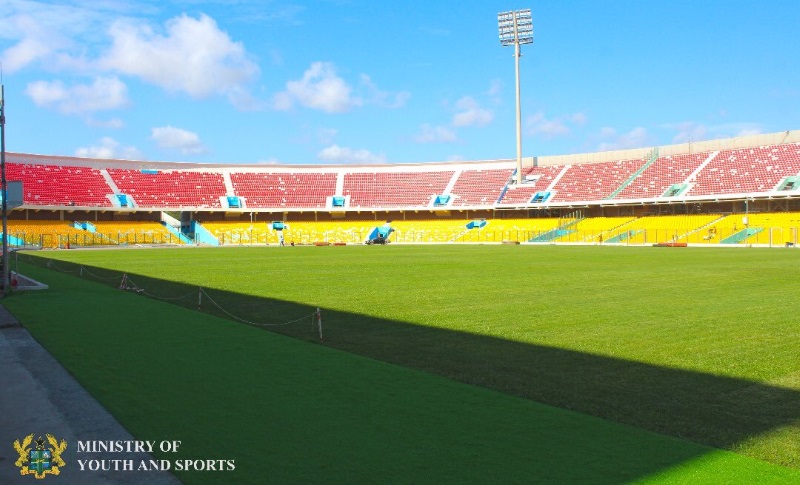
The 2018 Women’s Africa Cup of Nations (AWCON) finally kicks off in Ghana after a series of squeaky bum bumps.
Unsurprisingly with some big organizational hurdles negotiated, all attention is now focused on how to fill the stadiums to support the Black Queens keep the Cup in Ghana.
It’s a host-and-win agenda that is ‘all tip and no iceberg’. I am yet to hear a well-articulated vision of the legacy of the hosting of the event and how the tournament would ameliorate the ailing fortunes of women’s football in the long term.
Said the Sports Minister, Isaac Asiamah: “We need Ghanaians to fill the Accra Sports the stadium on November 17, every stand and space must be occupied. It is about encouraging our women and making sure that we express what we have for women as Ghanaians.”
For many political appointees then, getting through the tournament without a scratch will be a massive accomplishment. That is terribly short sighted.
What happens after AWCON 2018? When the trophy has been presented and the last of the teams have departed will women’s football be richer? What if Ghana does not win the tournament? – a realistic outcome given the bedlam that has proceeded the staging of the event?
Qualification for France 2019 will be a big achievement for Ghana; snatching the African title from the iron grip of Nigeria ahead of pretenders like Cameroon will be a coup d’état given our poor preparation. But there’s more at stake at AWCON 2018 than host and win.
Ghana is a story of unfulfilled potential in women’s football. For years, the women’s game has been on decline despite the veritable promise of the 1990s and heights of the early 2000s.
At the Black Queens’ first World Cup in 1999, they finished bottom of their Group with one point and one goal with a goal difference of -9. Japan finished with an identical record to finish bottom of Group C. 12 years later, Japan were crowned world champions; Ghana was did not even qualify for that World Cup. Indeed, Ghana has not been to the World Cup since China 2007.
Internationally, there have been a few sparks at junior level but these have rather been few and far between. The Black Queens lost their royalty in the African women’s football pecking order long ago. But it is the domestic game that has suffered the biggest decay since the heady days of Ghatel and Postcom ladies – This is the same golden age that produced a maiden World Cup appearance leading to three successive participations in the Fifa World Cup
The guns have since fallen silent. This is largely because women have been treated as second citizens in Ghana football. Their Fifa allocation was never used to their benefit and they did not even have an outrightly elected representation on the executive committee of the GFA. This, at a time when the stock of women was rising meteorically in other aspects of national life – politics, judiciary, governance etc.
What is at stake at AWCON 2018?
This tournament is a make or break for the development and sustenance of football among a generation of girls and young women in Ghana.
When the directive to halt domestic football came in the wake of the Anas sting operation an already tottering women’s league fell off the cliff. Club owners simply asked their players to go home.
These are young ladies who had no other source of livelihood and their very existence depended entirely on club owners – this included sanitary care among other necessaries. For them, it was probably a bigger hit than for the men.
The sad turn of events only vindicated parents and families who had always held the position that girls’ football was a waste of their lives. These ‘football girls’ and those intending to follow their footsteps were suddenly left with a crucial decision – keep playing football and staying hungry or find a job or a trade to earn your daily bread. For others it was staying in school to improve their chances of a decent living. Many dreams were at stake.
As a local club coach once told me “we sometimes have to fight parents to be able to have these girls play football” He continued: “sometimes we are left to completely cater for them. They become completely dependent on us”. It hard to fault the position of these aggrieved parents. Apart from Sea Lions, Dr. Papa Kwesi Nduom’s club who are better paid, most other women’s clubs barely keep afloat. For any player then, your best bet of a decent payday is an invitation to one of the national teams.
It is no surprise then that over the last few years a trend has quietly emerged – the same faces have often been recycled through our numerous female national teams. It is worse in the junior teams where some particular girls have played in tournaments on 2 or 3 occasions spanning 4 to 6 years respectively. I am not alleging any foul play, yet. There is however one obvious and irresistible conclusion; Ghana is not producing enough female talents to replenish our stock. Most young girls are not interested in pursuing football careers.
AWCON 2018 is unlikely to immediately reverse this trend. However, if the tournament leads to some decent investment in women’s football and generates enough enthusiasm among young girls in the country, giving them new (s)heroes and role models, a good foundation would have be put down for the sustainable growth of women’s football in Ghana.
Unfortunately, I see very little to be optimistic about.
Still AWCON is here, so by all means let us support our ladies.
